

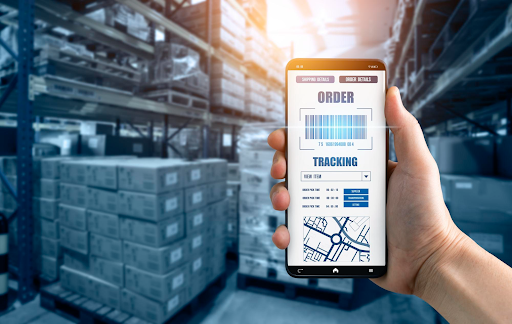
The UAE logistics industry is no longer a question of transporting boxes but a question of transportation data. Dubai is set to become a smart logistics hub on the global stage by 2026, as the D33 Economic Agenda will make it happen. This implies that a typical track and trace application will not suffice to be competitive among businesses.
In case you want to take the market by storm, then you need high performance digital solution. The following are 6 distinct steps to develop a logistics application in 2026 that will be tailored to fit the needs of the Middle Eastern market.
1. Adopt Agentic AI in Predictive Routing
Basic GPS is a thing of the past in 2026. In a bid to remain leading, mobile app developers in Dubai are currently incorporating Agentic AI. In comparison to a typical algorithm, AI agents are capable of autonomous decision-making, e.g. by rerouting a fleet on the fly because of a sudden sandstorm or unexpected traffic at a large-scale event, say the Dubai Shopping Festival.
Using predictive analytics, your application can predict demand surges and propose dynamic slotting in warehouses. This is a proactive strategy that helps to save on fuel and make sure that your delivery windows are achieved with a 99% accuracy.
2. Connected Your Fleet through 5G-IoT
The 5G system in Dubai has the fastest infrastructure globally. Android application development in Dubai using 5G-native features should be among the priorities in your development process. This can support massive machine-style communications, in which the high-fidelity data is transmitted by thousands of IoT sensors on pallets, trucks, and even individual packages at once.
Such sensors not only keep track of location, but also of humidity, temperature, which is paramount to the UAE cold chain logistics, and shock levels. This would make sure that delicate or perishable products are tracked in their path all the seconds of the way.
3. Construct a Trust Protocol using Blockchain
The 2026 gold standard is transparency. International business also involves a number of stakeholders, such as customers, carriers, and clients, to have access to the same information. With a decentralized registry, you generate an unmistakable account of all transactions.
In Dubai, smart contracts allow experienced app developers to automate payments. As an example, when a digital Proof of Delivery is registered by the driver (through a QR scan) the money is immediately emitted to the vendor. This brings an end to paperwork and lessens the controversy that tends to characterize the supply chain.
4. Optimize Android Super-App Ecosystem
Although there is a high presence of iOS, Android is the leading OS among the logistics workforce in the region. In the context of Android application development in Dubai, your application must be created with Super-App functionality.
This means integrating:
- Biometric Authentication: A driver with fingerprint or face recognition information is allowed to provide a login.
- RTL (Right-to-Left) Support: making the UI fully optimized with the Arabic language in mind.
- Offline Mode: This is also crucial for drivers who drive to the deserts that have little connectivity at times.5.Put Green Logistics and Carbon Tracking First
The UAE’s future vision has sustainability as one of its pillars. Carbon Footprint reports should be offered by the logistics apps in 2026. Step five will entail the creation of a module that will determine the emissions incurred in each delivery.
This goes beyond the PR gimmick; most corporate clients are demanding environmental compliance. Your application can recommend the most ecologically friendly route or focus on electric vehicle fleets so that your business can become coordinated with the Net Zero 2050 objectives in the UAE.
5. Budgeting and Selecting the Right Partner
Financial planning is the last and most essential process. The cost of developing a mobile app in Dubai will highly depend on complexity. The cost of developing a logistics application with AI and IoT technology is greater than that of a simple utility application, but the payback of operational efficiency is enormous.
Estimated Mobile App Development Cost in Dubai (2026)
| App Complexity | Features Included | Estimated Cost (AED) |
| Basic (MVP) | Simple tracking, notifications, user profiles. | 85,000 – 110,000 |
| Mid-Level | Advanced route optimization, payment gateways, IoT integration. | 150,000 – 250,000 |
| Enterprise/Advanced | AI agents, Blockchain, 5G-native features, custom ERP sync. | 300,000 – 500,000+ |
Conclusion: Navigating the Future of Logistics
In 2026, it will be necessary to develop a logistics app that will be built not only based on the local market understanding but also on high-end technologies. Being AI-driven in your decision-making or establishing that your Android application development in Dubai will be 5G-ready, every step is aimed at making your operations leaner and more transparent.
Not only will the right app developers in Dubai write code, but he or she will also guide you through the regulatory process and local technical specifics of the GCC area. Contact us today!