
Imagine mid at night you crave for frozen meat meal and beverage. You order both of them from different outlets, food delivers on time, while beverages deliver late. You paid the same amount for both but you aren’t satisfied with the drink. So, what’s the reason behind, behind the scenes, every shipment comes with a tough decision.
Food and beverages distribution looks simple from the outside. Products move from suppliers to warehouses, then one store, restaurants, and customers. It’s challenging for food and beverage businesses to prioritize cost-reduction strategies to maintain profitability and deliver exceptional customer needs.
Rising Cost Are Squeezing Every Link In Chain
Over the years, food and beverages have faced cost pressures. Fluctuating fuel prices, maintaining proper temperature for perishable goods, warehouse operations, labor costs are some of the big reasons behind the rising cost of food and beverages.
So, here we have listed some of the main reasons behind how high cost affects every sector in the chain.
- Labor shortages drive higher wages in processing plants and factories
- Cold storage and refrigerations costs rise due to higher energy prices
- Grocery stores experience increased operating costs including staffing and utilities
- Manufactures pass higher costs to distributors to protect margins
- Demand for premium or speciality products declines
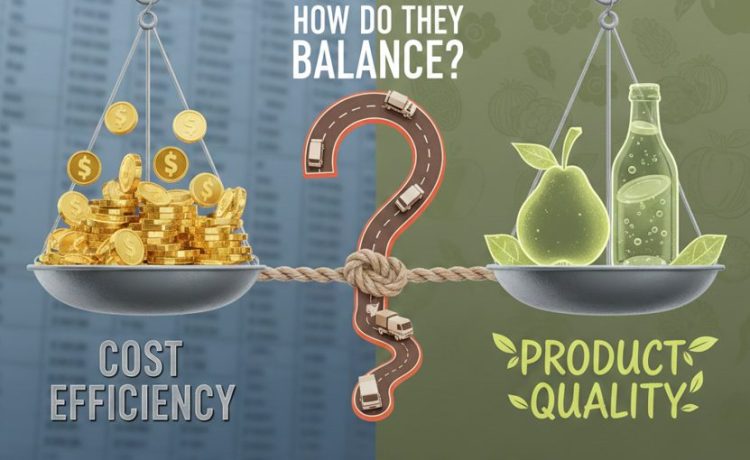
Overall, there are a lot more reasons that affect the market. Let’s move further and know how we distributors can balance cost efficiency and product quality.
Best Practices for Balancing Cost Efficiency & Product Quality
For more demand and traffic to your store you need strategies to follow. Here we have listed top best practices that you can implement to balance cost and product quality for your food and beverages business.
- Analyze where losses occur, like spoilage, overproduction, damaged goods, or returns and resolve those issues instead of cutting product standards.
- Use accurate sales data and seasonal trends to avoid overstocking or stockouts, reducing both waste and emergency purchasing costs.
- Apply First-In, First-Out practices and real time inventory tracking to maintain freshness and minimize expired products.
- Maintain proper temperature control during storage and transportation to prevent spoilage and protect product quality.
- Use route optimization, warehouse management systems, and temperature monitoring tools to improve efficiency without sacrificing its quality.
- Ensure to track metrics like spoilage rates, delivery accuracy, returns, and cost per unit to balance efficiency with quality outcomes.
- Evaluate decisions based on customer retention, brand trust, and reduce risk, not just immediate cost reductions.
- Use automation tools for quality checks and problem solving rather than relying on staff.
- Align procurement, operations, quality and sales team to make balanced decisions that support both cost and quality goals.
- Well-trained staff handle products correctly, follow safety protocols, and help prevent quality failures that lead to financial loss.
So far we have looked at a list of best practices for how we can manage cost and product quality in food and beverages. Now, let’s move how customer expectations raise the stakes on quality control.
Customer Expectations Raise The Stakes on Quality Control
Customer expectations have significantly increased the importance of quality control in food and beverage distribution. Retailers, foodservice operators, and end consumers now demand consistent product quality, strict food safety compliance, transparency, and reliable delivery.
Any lapse in freshness, product quality, packaging integrity or temperature control can result in rejected shipments, financial losses, or reputational damage. As customers expect higher standards without proportional price increases, distributors must implement stronger quality checks, traceability systems, and compliance processes.
Below we have listed ways customer expectations raise the stakes on quality control.
- Customers demand consistent product quality across every shipment
- Freshness expectations reduce tolerance for delivery delays
- Retailers require strict adherence to food safety regulations
- Increased demand for product traceability and transparency
- Higher sensitivity to packaging damage
- Temperature control failures are less acceptable than ever
- Sustainability expectations affect sourcing and handling standards
- Quality inconsistencies can lead to lost contracts
- Strong quality performance builds long term customer loyalty
- Real time tracking is becoming a customer expectations
- Rejected shipments increase operational costs
Wrapping Up
At its core, it’s challenging to balance cost efficiency and product quality is about people, not just processes. Food and beverages are making tough calls every day choosing how to stretch shrinking budgets while still delivering products that meet customer expectations and reflect their value. When costs rise and margins tighten, the pressure is felt on warehouse floors, in delivery trucks, and across customer relationships.
Overall, by keeping the human impact at the centre of every decision, distributors can turn daily challenges into opportunities for long term relationship and sustainable growth.