

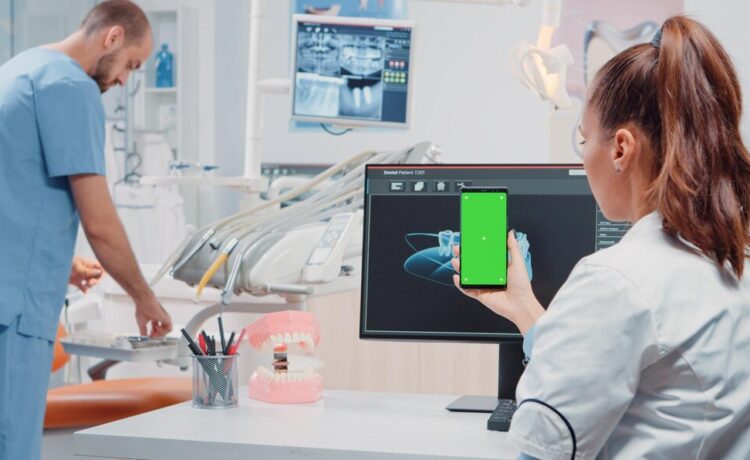
The Role of Artificial Intelligence in Enhancing Dental Care
Artificial Intelligence (AI) is significantly transforming dental care, reshaping how dental professionals diagnose, treat, and manage patient care. With nearly half of adults over the age of 30 experiencing some form of periodontal disease, the demand for innovative dental solutions has never been more critical. AI is not just an efficiency tool; it is fundamentally altering the patient experience by delivering personalized care and improving diagnostic accuracy. As the dental field evolves, integrating AI emerges as a vital development that promises to elevate the quality of care provided to patients.
Key Roles of AI in Dental Care
The integration of AI into dental practices is multifaceted, impacting various aspects of care delivery. Here are some essential roles that AI plays in enhancing dental services:
AI in Diagnosing Dental Issues
Precision is crucial when diagnosing dental problems. AI systems can analyze X-rays and other diagnostic measurements with remarkable accuracy. For instance, AI algorithms can detect cavities, gum diseases, and even pre-malignant oral cancers at very early stages. By employing statistical learning methods, AI can predict outcomes based on data, thereby enhancing the accuracy of diagnoses. This capability not only aids in early detection but also minimizes the likelihood of misdiagnosis, leading to more effective treatment plans and improved patient outcomes.
Personalized Treatment Plans
Once a diagnosis is established, the next step is treatment. AI assists in creating tailored treatment plans based on individual patient profiles. Advanced algorithms can evaluate multiple prognosis models, allowing dentists to anticipate potential outcomes and adjust treatment plans accordingly. This personalized approach ensures that patients receive the most effective care possible. Collaborating with a healthcare software development company can further enhance this benefit, enabling dental practices to implement AI solutions that cater specifically to their patient demographics, thus improving overall treatment efficacy.
AI in Dental Surgery
Surgical procedures in dentistry have also benefited from advancements in AI technology. Many complex operations require a level of precision that is challenging to achieve manually. AI-powered robotic systems can perform repetitive tasks with high accuracy, significantly reducing the risk of errors. These systems can assist surgeons by providing critical data during intricate procedures, such as optimizing the placement of dental implants. The integration of AI into surgical practices not only enhances precision but also improves recovery times for patients, as procedures can be completed with minimal invasiveness.
Streamlining Administrative Tasks
AI’s impact extends beyond clinical applications; it also enhances the administrative side of dental practices. AI-driven applications can automate appointment scheduling, manage patient records, and streamline various administrative processes. This not only saves time for dental staff but also allows them to focus more on patient care. Additionally, AI can analyze patient data to identify trends, further improving the quality of services offered by dental practices. By automating routine tasks, dental professionals can allocate more time to engaging with patients and addressing their concerns, ultimately leading to a more satisfying patient experience.
Benefits of AI in Dental Care
The integration of AI into dental care presents numerous advantages that enhance the overall patient experience:
- Improved Diagnosis: AI significantly improves the accuracy of diagnosing oral health issues. Studies indicate that AI can identify dental caries with up to 95% efficiency, surpassing the capabilities of even the most skilled human practitioners. This technological advancement acts as an additional layer of scrutiny in the dental office, fostering trust between patients and practitioners and leading to timely interventions.
- Enhanced Treatment Plans: AI facilitates the rapid development of customized treatment plans tailored to individual patients. By analyzing historical treatment data, AI helps dentists select the most appropriate treatment paths, ensuring that care is personalized and effective. This tailored approach can significantly improve patient satisfaction, as individuals feel that their unique needs are being addressed.
- Time Efficiency: AI automates many mundane tasks, allowing dentists to dedicate more time to patient care. This efficiency enhances the patient experience and streamlines the overall workflow within dental practices. With AI handling administrative duties, dental professionals can focus on complex cases that require their expertise, ultimately leading to better patient outcomes and increased practice efficiency.
- Cost Savings: The use of AI in dental care can lead to significant cost reductions. By improving the accuracy and effectiveness of treatments, AI helps decrease the expenses associated with treating oral health issues. For dental practices, this means lower overhead costs and the potential for increased profitability, allowing them to invest in further advancements in technology and training.
The Future of AI in Dental Care
As AI technology continues to evolve, its applications in dental care are expected to expand significantly. The market for AI in dental imaging alone is projected to reach approximately $2.84 billion by 2029, reflecting the growing importance of AI in this field. Furthermore, the global digital dentistry market is anticipated to exceed $12.2 billion by 2028, indicating a robust future for AI integration in dental practices. This growth signals a broader trend towards digital transformation within healthcare, where AI plays a central role in enhancing patient care and operational efficiency.
The potential of AI to enhance dental care extends beyond diagnostics and treatment. As more dental practices adopt AI technologies, we can expect improvements in patient engagement, treatment outcomes, and overall practice efficiency. By leveraging AI, dental professionals can provide a higher standard of care, ultimately benefiting both patients and practitioners.
The future of dental care will likely see a more interconnected approach, where AI systems communicate seamlessly with other healthcare technologies, leading to a more holistic view of patient health. To fully harness the capabilities of AI in healthcare, dental practices should consider partnering with an AI software development company. Such partnerships can facilitate the development of custom solutions tailored to the specific needs of dental practices, ensuring they remain at the forefront of technological advancements.
By integrating AI into their operations, dental practices can enhance their service offerings and improve patient satisfaction, creating a win-win scenario for both parties. AI is revolutionizing the dental care landscape by enhancing diagnostic accuracy, personalizing treatment plans, and streamlining administrative tasks. As technology continues to advance, it promises to deliver even greater benefits to both dental professionals and their patients.
For those looking to explore the landscape of software development for AI solutions, consider checking out the top software development companies that can assist in this transformative journey.